
Refer to the exhibit. A network administrator has configured a standard ACL to permit only the two LAN networks attached to R1 to access the network that connects to R2 G0/1 interface, but not the G0/0 interface. When following the best practices, in what location should the standard ACL be applied?
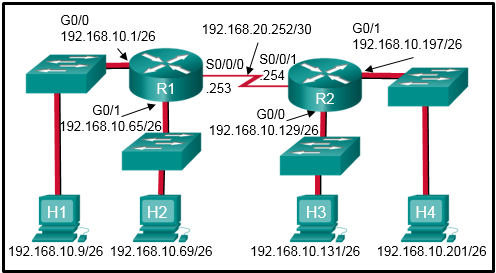
Same case: Refer to the exhibit. A network administrator has configured a standard ACL to permit only the two LAN networks attached to R1 to access the network that connects to R2 G0/1 interface. When following the best practices, in what location should the standard ACL be applied?
- R1 S0/0/0 outbound
- R2 G0/1 outbound
- R2 G0/0 outbound
- R2 S0/0/1 outbound
- R1 S0/0/0 inbound
- R2 G0/1 inbound
Explanation: Standard ACLs should be placed as close to the destination as possible. This is because standard ACLs only filter based on the source IPv4 address; applying them too close to the source would block the traffic from reaching all other possible destinations. By applying the ACL outbound on R2's G0/0 interface, the administrator specifically prevents traffic from R1's LANs from entering that particular network while ensuring the packets can still successfully reach the network connected to R2's G0/1 interface.
Related exam: CCNA 3 Final Exam Answers
