Refer to the exhibit. As part of an OSPF network, R1 and R2 are trying to become adjacent neighbors. Although it appears that the two systems are communicating, neither of the routing tables include OSPF routes received from its neighbor. What could be responsible for this situation?
IT Exam Items Repository › Category: CCNA Discovery v4 › Refer to the exhibit. As part of an OSPF network, R1 and R2 are trying to become adjacent neighbors. Although it appears that the two systems are communicating, neither of the routing tables include OSPF routes received from its neighbor. What could be responsible for this situation?
Refer to the exhibit. As part of an OSPF network, R1 and R2 are trying to become adjacent neighbors. Although it appears that the two systems are communicating, neither of the routing tables include OSPF routes received from its neighbor. What could be responsible for this situation?
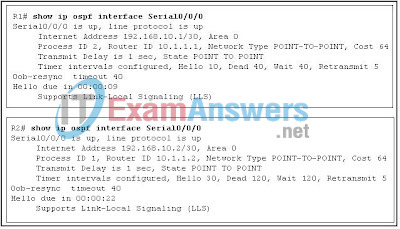
- R1 and R2 are not on the same subnet.
- The Process IDs on each router do not match.
- The timer intervals on the routers do not match.
- The value set for the Transmit Delay time on both routers is too low.
Related exam: CCNA Discovery 3: DRSEnt Chapter 6 Exam
About The Author

The ITExamAnswers Editorial Team is a dedicated group of certified IT professionals and network engineers. We rigorously review, verify, and update all exam materials to ensure you receive the most accurate and reliable resources for your certification journey.