
A network administrator is designing an IPv4 addressing scheme and requires these subnets.
1 subnet of 100 hosts
2 subnets of 80 hosts
2 subnets of 30 hosts
4 subnets of 20 hosts
Which combination of subnets and masks will provide the best addressing plan for these requirements?
- 9 subnets of 126 hosts with a 255.255.255.128 mask
- 3 subnets of 126 hosts with a 255.255.255.192 mask
6 subnets of 30 hosts with a 255.255.255.240 mask - 3 subnets of 126 hosts with a 255.255.255.128 mask
6 subnets of 30 hosts with a 255.255.255.224 mask - 1 subnet of 126 hosts with a 255.255.255.192 mask
2 subnets of 80 hosts with a 255.255.255.224 mask
6 subnets of 30 hosts with a 255.255.255.240 mask
Explanation: VLSM Calculator Online
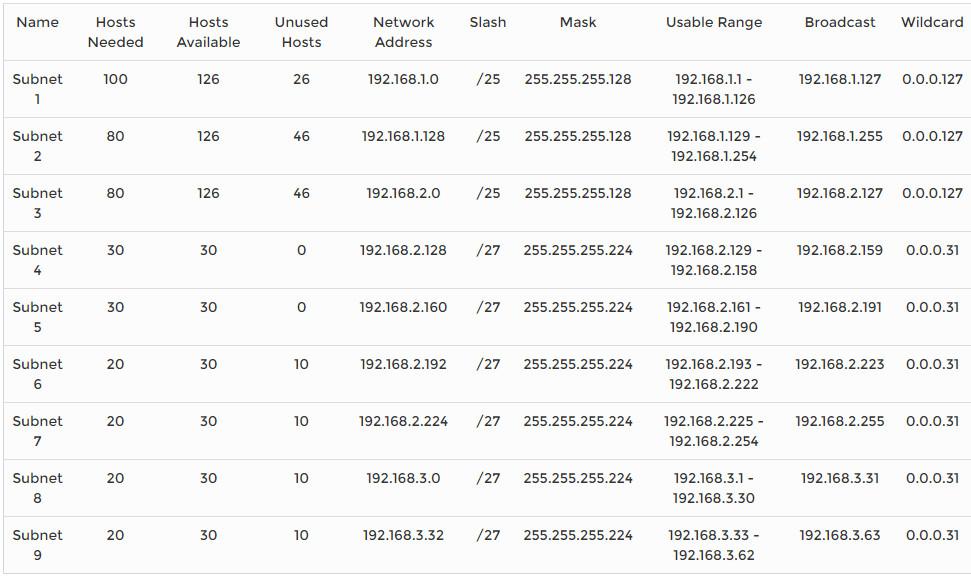
IPv4 subnets that require 100 and 80 hosts are provided by creating subnets of 126 usable addresses, each of which requires 7 host bits. The resulting mask is 255.255.255.128.
Subnets that require 30 and 20 hosts are provided by creating subnets of 30 usable addresses, each of which requires 5 host bits. The resulting mask is 255.255.255.224.
Creating nine subnets, each consisting of 126 usable addresses, would waste large numbers of addresses in the six smaller subnets.
Related exam: CCNA 2 v6.0 - CCENT (ICND1) Practice Certification Exam
Related exam: CCNA 200-301 Certification Practice Exam Answers
