
Refer to the exhibit. The company has decided that no traffic initiating from any other existing or future network can be transmitted to the Research and Development network. Furthermore, no traffic that originates from the Research and Development network can be transmitted to any other existing or future networks in the company. The network administrator has decided that extended ACLs are better suited for these requirements. Based on the information given, what will the network administrator do?
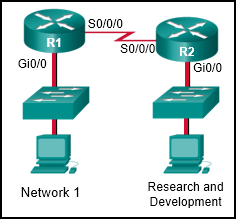
- One ACL will be placed on the R1 Gi0/0 interface and one ACL will be placed on the R2 Gi0/0 interface.
- Only a numbered ACL will work for this situation.
- One ACL will be placed on the R2 Gi0/0 interface and one ACL will be placed on the R2 S0/0/0 interface.
- Two ACLs (one in each direction) will be placed on the R2 Gi0/0 interface.
Explanation: Extended ACLs should be placed as close to the source of the traffic as possible to filter undesirable traffic before it crosses the network infrastructure. To prevent traffic originating from the Research and Development network from reaching others, an ACL is placed inbound on R2's Gi0/0 interface to filter the traffic as it enters the router. To block traffic from all other existing or future networks from reaching Research and Development, a second ACL is applied outbound on the same Gi0/0 interface, ensuring any traffic destined for that network is dropped before exiting the router toward the destination. A single router interface can support one inbound and one outbound ACL per protocol.
Related exam: Enterprise Networking, Security, and Automation ( Version 7.00) - ENSA Final Exam
