Month: October 2017
Lab Objective: The objective of this lab exercise is for you to learn and understand how to manually configure the OSPF router ID. Lab Purpose: Manually configuring the OSPF router ID is a fundamental skill. By default, if only physical interfaces are configured on a router, the highest …
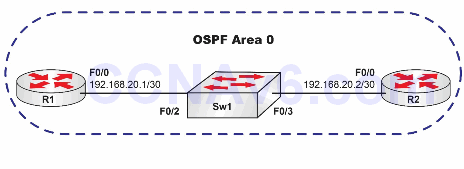
Lab Objective: The objective of this lab exercise is for you to learn and understand how to enable OSPF on broadcast network types. These include Ethernet and Token Ring (although you are not likely to encounter Token Ring). Lab Purpose: Enabling OSPF on broadcast network types is a …
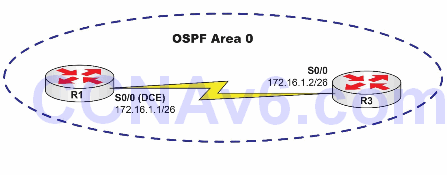
Lab Objective: The objective of this lab exercise is for you to learn and understand how to enable Open Shortest Path First (OSPF) on point-to-point network types. These include High-level Data Link Control (HDLC) and point-to-point protocol (PPP). Lab Purpose: Enabling OSPF on point-to-point network types is a …
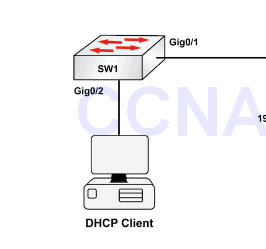
Lab Objective: The objective of this lab exercise is for you to learn how to implement DHCP snooping in your network to protect your DHCP environment. Lab Purpose: DHCP snooping is a feature that enables a network to trust only the required DHCP servers in the network to …
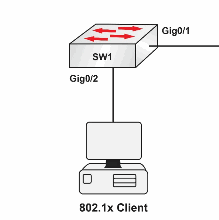
Lab Objective: The objective of this lab exercise is for you to learn how to configure 802.1x in your switch infrastructure. Lab Purpose: Understanding how to enable and configure 802.1x in your switch infrastructure is a core security topic when you think about security in Layer 2 of …
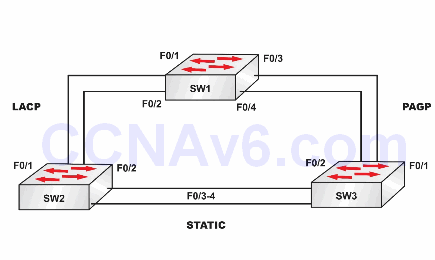
Lab Objective: The objective of this lab exercise is for you to learn and understand how to use redundant links between Cisco switches in order to build port channels. Lab Purpose: Understanding how to enable the different port-channel protocols on a Layer 2 network is a must for …
Lab Objective: The objective of this lab exercise is for you to learn and understand how to configure RPVST. By default, RPVST converges much faster than traditional STP. Lab Purpose: RPVST configuration is a fundamental skill. As a Cisco engineer, as well as in the Cisco CCNA exam, …