Author: ITExam Editorial Team
The ITExamAnswers Editorial Team is a dedicated group of certified IT professionals and network engineers. We rigorously review, verify, and update all exam materials to ensure you receive the most accurate and reliable resources for your certification journey.
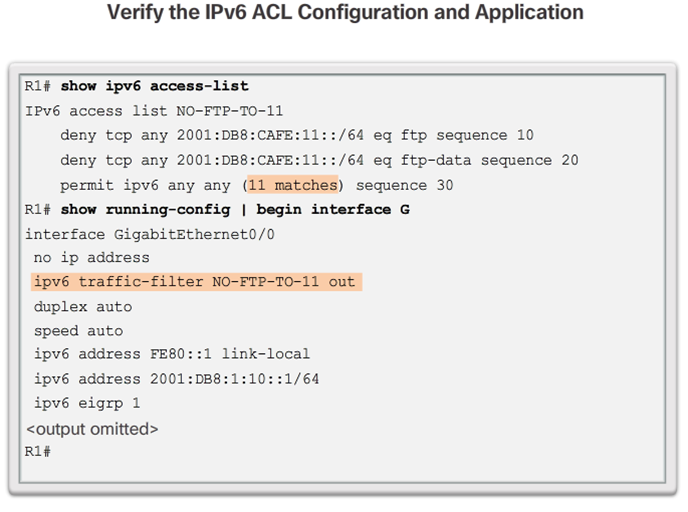
Chapter 4 - Sections & Objectives 4.1 Standard ACL Operation and Configuration Configure standard IPv4 ACLs. 4.2 Extended IPv4 ACLs Configure extended IPv4 ACLs. 4.3 IPv6 ACLs Configure IPv6 ACLs. 4.4 Troubleshoot ACLs Troubleshoot ACLs. 4.1 Standard ACL Operation and Configuration Review ACLs and the Wildcard Mask An …
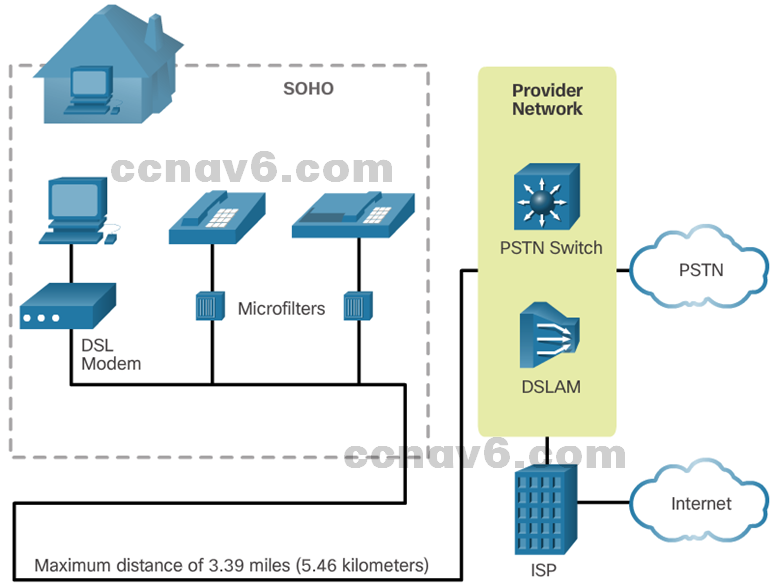
Chapter 3- Sections & Objectives 3.1 Remote Access Connections Select broadband remote access technologies to support business requirements. 3.2 PPPoE Configure a Cisco router with PPPoE. 3.3 VPNs Explain how VPNs secure site-to-site and remote access connectivity. 3.4 GRE Implement a GRE tunnel. 3.5 eBGP Implement eBGP in …
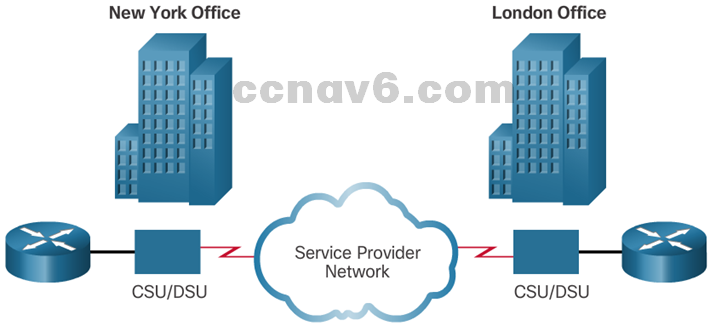
Chapter 2 - Sections & Objectives 2.1 Serial Point-to-Point Overview Configure HDLC encapsulation. 2.2 PPP Operation Explain how PPP operates across a point-to-point serial link. 2.3 PPP Implementation Configure PPP encapsulation. 2.4 Troubleshoot WAN Connectivity Troubleshoot PPP. 2.1 Serial Point-to-Point Overview Serial Communications Point-to-point connections are used to …
Chapter 1 - Sections & Objectives 1.1 WAN Technologies Overview Explain WAN access technologies available to small to medium-sized business networks. 1.2 Selecting a WAN Technology Select WAN access technologies to satisfy business requirements. 1.1 WAN Technologies Overview Purpose of WANs WANs connect LANs WANs are used to …
Chapter 11 - Sections & Objectives 11.1 Network Design Identify the devices used in a small network. Identify the protocols used in a small network. Explain how a small network serves as the basis of larger networks. 11.2 Network Security Explain why security measures are necessary on network …
Chapter 10 - Sections & Objectives 10.0 Introduction 10.1 Application Layer Protocols Explain how the functions of the application layer, session layer, and presentation layer work together to provide network services to end user applications. Explain how common application layer protocols interact with end user applications. 10.2 Well-Known …
Chapter 9 - Sections & Objectives 9.0 Introduction 9.1 Subnetting an IPv4 Network Describe the purpose of the transport layer in managing the transportation of data in end-to-end communication. Describe characteristics of the TCP and UDP protocols, including port numbers and their uses. 9.2 Addressing Schemes Explain how …
Chapter 8 - Sections & Objectives 8.0 Introduction 8.1 Subnetting an IPv4 Network Explain how subnetting segments a network to enable better communication. Explain how to calculate IPv4 subnets for a /24 prefix. Explain how to calculate IPv4 subnets for a /16 and /8 prefix. Given a set …
Chapter 7 - Sections & Objectives 7.1 IPv4 Network Addresses Convert between binary and decimal numbering systems. Describe the structure of an IPv4 address including the network portion, the host portion, and the subnet mask. Compare the characteristics and uses of the unicast, broadcast, and multicast IPv4 addresses. …
Chapter 6 - Sections & Objectives 6.1 Network Layer Protocols Describe the purpose of the network layer in data communication. Explain why the IPv4 protocol requires other layers to provide reliability. Explain the role of the major header fields in the IPv4 and IPv6 packet. 6.2 Routing Explain …