Author: ITExamAnswers Editorial Team
The ITExamAnswers Editorial Team is a dedicated group of certified IT professionals and network engineers. We rigorously review, verify, and update all exam materials to ensure you receive the most accurate and reliable resources for your certification journey.
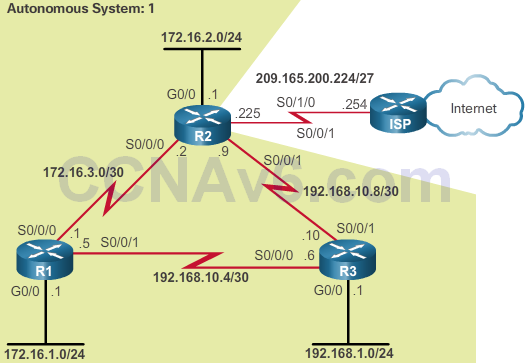
Chapter 7 - Sections & Objectives 7.1 Tune EIGRP Configure EIGRP to improve network performance. 7.2 Troubleshoot EIGRP Troubleshoot common EIGRP configuration issues in a small to medium-sized business network. 7.1 Tune EIGRP Automatic Summarization EIGRP Automatic Summarization Summarization limits the number of routing advertisements and the …
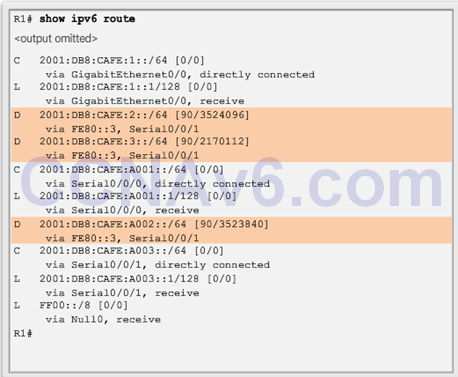
Chapter 6 - Sections & Objectives 6.1 EIGRP Characteristics Explain the features and characteristics of EIGRP 6.2 Implement EIGRP for IPv4 Implement EIGRP for IPv4 in a small to medium-sized business network 6.3 EIGRP Operation Explain how EIGRP operates in a small to medium-sized business network 6.4 Implement …
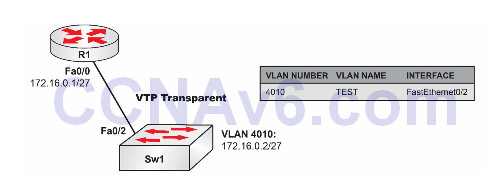
Lab Objective: The objective of this lab exercise is for you to learn and understand how to turn off the auto-negotiation of a trunk link. Lab Purpose: Switch interfaces are set to automatically attempt to create a trunk link when connected to another switch. You need to know …
Lab Objective: The objective of this lab exercise is for you to learn and understand how to configure static MAC entries for port security. By default, MAC entries are learned dynamically on a switchport. Lab Purpose: Static port security MAC entries are an advanced skill. Static MAC address …
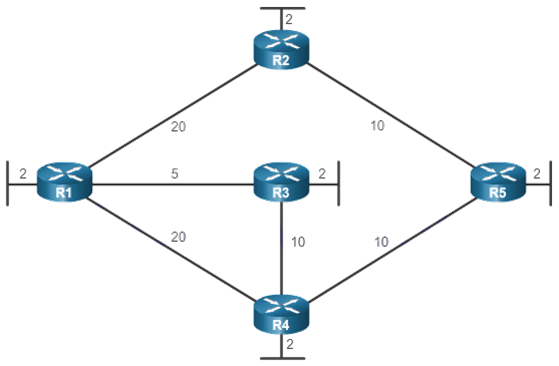
Chapter 5 - Sections & Objectives 5.1 Dynamic Routing Protocols Explain the features and characteristics of dynamic routing protocols. 5.2 Distance Vector Dynamic Routing Explain how distance vector routing protocols operate. 5.3 Link-State Dynamic Routing Explain how link-state protocols operate. 5.1 Dynamic Routing Protocol Types of Routing …
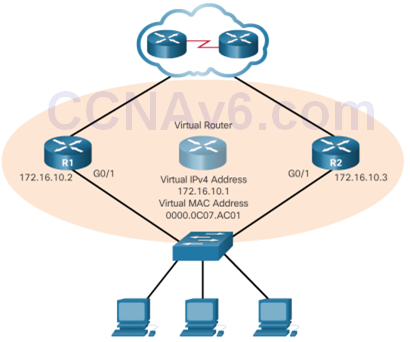
Chapter 4 - Sections & Objectives 4.1 Link Aggregation Concepts Explain link aggregation operation in a switched LAN environment. 4.2 Link Aggregation Configuration Implement link aggregation to improve performance on high-traffic switch links. 4.3 First Hop Redundancy Protocols Implement HSRP to provide first hop redundancy. 4.1 Link …
Lab Objective: The objective of this lab exercise is to ensure that learned MAC addresses on a secured port are retained in the switch’s NVRAM in the event of a reboot. By default, secured MAC addresses are flushed during switch reboots. Lab Purpose: Retaining learned secure MAC addresses …
Lab Objective: The objective of this lab exercise is to configure basic switch security to prevent MAC address flooding on switchports. This is accomplished by limiting the number of MAC entries that are allowed to be learned on a port. By default, there is no limit on MAC …