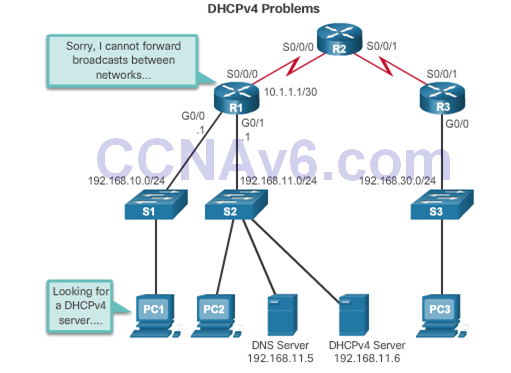
Chapter 8 - Sections & Objectives 8.1 DHCPv4 Explain how DHCPv4 operates in a small- to medium-sized business network. Configure a router as a DHCPv4 server. Configure a router as a DHCPv4 client. Troubleshoot a DHCP configuration for IPv4 in a switched network. 8.2 DHCPv6 Explain the operation …
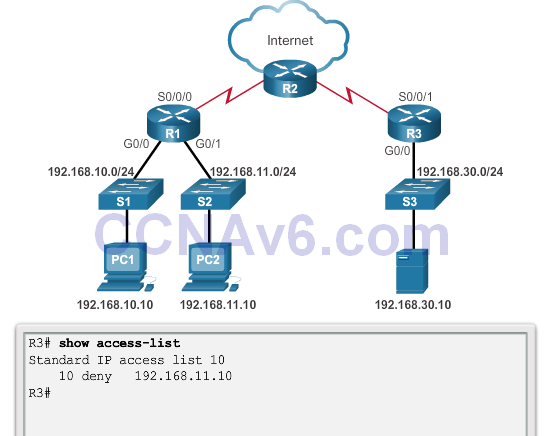
Chapter 7 - Sections & Objectives 7.1 ACL Operation Explain how ACLs filter traffic. Explain how ACLs use wildcard masks. Explain how to create ACLs. Explain how to place ACLs. 7.2 Standard IPv4 ACLs Configure standard IPv4 ACLs to filter traffic to meet networking requirements. Use sequence numbers …
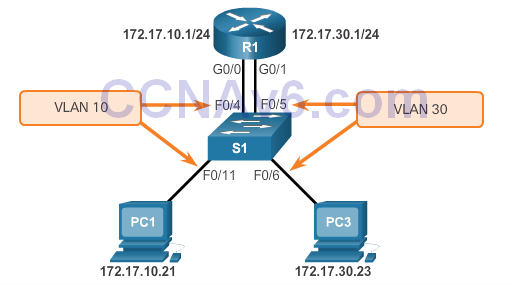
Chapter 6 - Sections & Objectives 6.1 VLAN Segmentation Explain the purpose of VLANs in a switched network. Explain how a switch forwards frames based on VLAN configuration in a multi-switch environment. 6.2 VLAN Implementations Configure a switch port to be assigned to a VLAN based on requirements. …
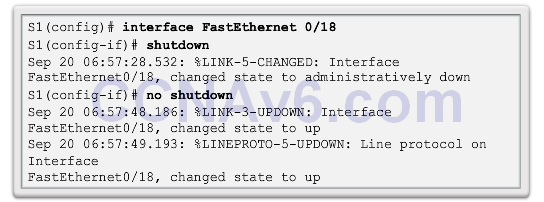
Chapter 5 - Sections & Objectives 5.1 Basic Switch Configuration Configure initial settings on a Cisco switch. Configure switch ports to meet network requirements. 5.2 Switch Security: Management and Implementation Configure the management virtual interface on a switch. Configure the port security feature to restrict network access. 5.1 …
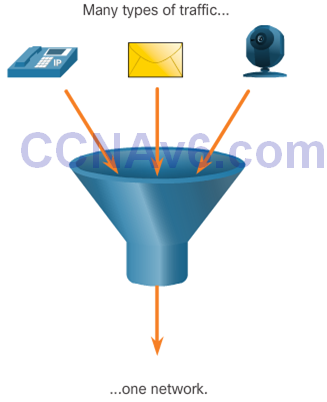
Chapter 4 - Sections & Objectives 4.1 LAN Design Explain how switched networks support small to medium-sized businesses. Explain how data, voice, and video are converged in a switched network. Describe a switched network in a small to medium-sized business. 4.2 The Switched Environment Explain how Layer 2 …
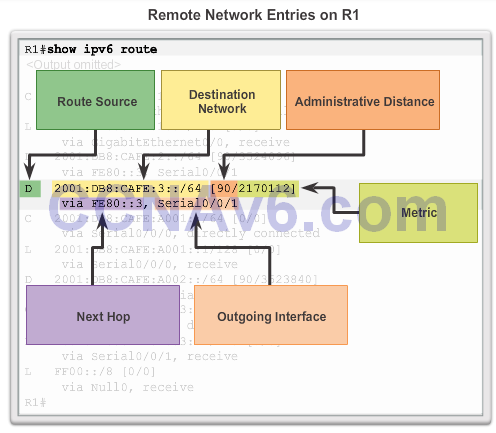
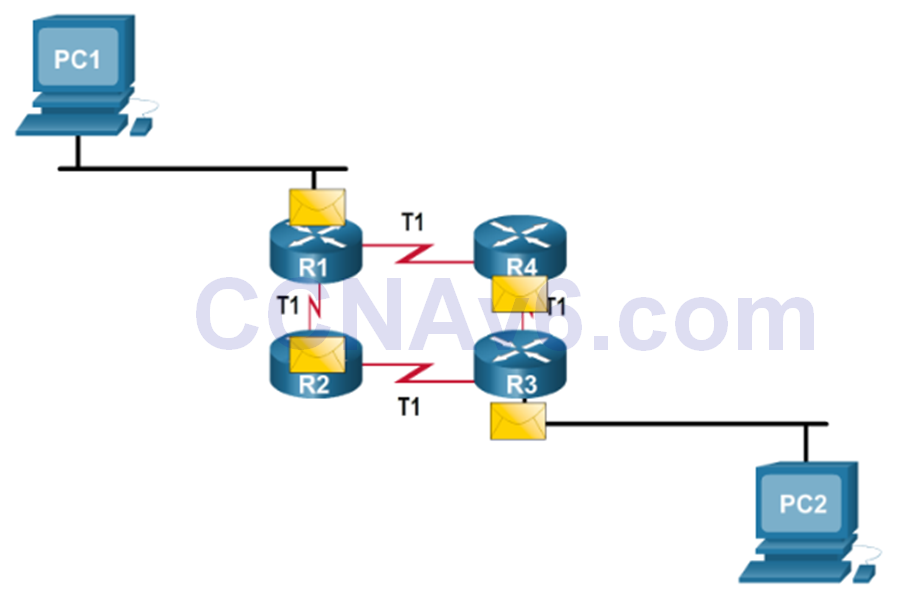
Chapter 3 - Sections & Objectives 3.1 Dynamic Routing Protocols Explain the purpose of dynamic routing protocols. Explain the use of dynamic routing and static routing 3.2 RIPv2 Configure the RIPv2 routing protocol. 3.3 The Routing Table Explain the components of an IPv4 routing table entry for a …
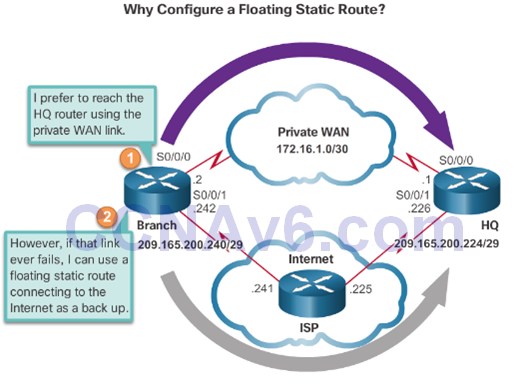
Chapter 2 - Sections & Objectives 2.1 Static Routing Implementation Explain the advantages and disadvantages of static routing. Explain the purpose of different types of static routes. 2.2 Configure Static and Default Routes Configure IPv4 and IPv6 static routes by specifying a next-hop address. Configure IPv4 and IPv6 …
Chapter 1 - Sections & Objectives 1.1 Router Initial Configuration Describe the primary functions and features of a router. Configure basic settings on a router to route between two directly-connected networks, using CLI. Verify connectivity between two networks that are directly connected to a router. 1.2 Routing Decisions …
Lab Objective: The objective of this lab exercise is to configure routers and switches to be able to communicate with remote networks. By default, devices can only communicate with locally-connected networks. Lab Purpose: Configuring a default gateway on routers and switches is a fundamental skill. Default gateways allow …
Lab Objective: The objective of this lab exercise is for you to learn and understand how to set the auto-negotiation type on a trunk link. Lab Purpose: Switch interfaces are set to automatically attempt to create a trunk link when connected to another switch. You need to know …